Criminal Legal Reform

Each year, Idahoans report civil liberties violations to the ACLU of Idaho. Year after year, one thing remains the same: over half of the civil liberties violations we learn about are the result of our state’s broken criminal legal system.
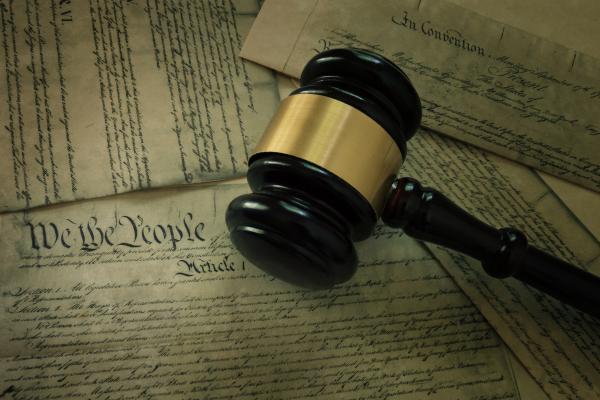
Judge's gavel on top of the U.S. Constitution

We know all Idahoans deserve equal access to their constitutional rights, including the right to an attorney, the right to access medical care, and the right to be free from cruel and unusual punishment. Our criminal legal advocacy is rooted in the simple fact that being accused or convicted of a crime should never mean restricted or reduced access to these rights.

Our Criminal Legal Reform Work

The ACLU of Idaho advocates for the constitutional civil rights of those impacted by the criminal legal system by:

  • Working in the courts to protect, defend, and expand the constitutional and civil rights of defendants and incarcerated people.
  • Advocating strategically in the legislature to fight policies that contribute to over-criminalization and mass incarceration, and to support reform policies that advance the rights, freedoms, and dignity of those impacted by the system.
  • Empowering defendants, prisoners, and folks with convictions to know and exercise their rights, including the right to due process, human conditions of confinement, medical care, and voting.
  • Amplifying the voices and lived experiences of those impacted by Idaho's criminal legal system, with the goal of increasing public awareness of the harms, dangers, and injustices within the system.

Other Organizations Fighting for Criminal Justice Reform in Idaho

  • Black and Pink - Fighting for LGBTQIA2S+ people and those living with HIV/AIDS who are affected by the criminal legal system.

Have your civil liberties been violated?

The Latest


Know Your Rights
Silhouette of a hand holding handcuffs against a sunset.

Your Rights as a Prisoner

Prisoners in Idaho should feel empowered to advocate for themselves within the criminal legal system.
Resource
A worn American flag is covered by barb wire outside a prison

2025 Legislative Session: Criminal Justice
In 2025, Idaho lawmakers passed a half dozen laws that will further burden our courts, prisons, and jails.
Press Release
Wooden gavel

ACLU files emergency motion asking court to intervene in State Public Defender disaster
The ACLU filed an emergency motion with the Idaho Supreme Court in the Tucker v. State of Idaho class action.
Press Release
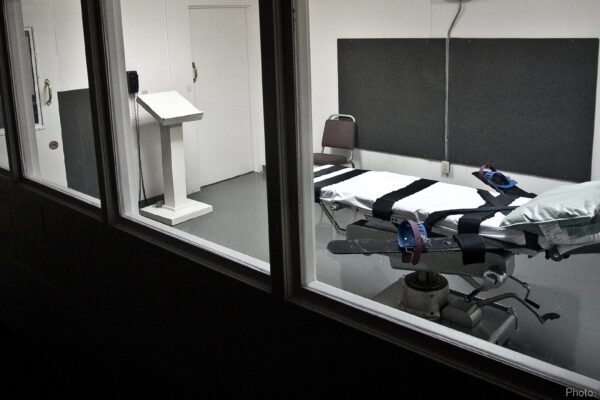
Empty lethal injection execution chamber with injection table and podium

ACLU of Idaho Statement on Failed Killing of Thomas Creech

This morning, the state of Idaho failed to complete the execution of Thomas Creech, a man who has been on death row for 50 years. The ACLU of Idaho condemns the death penalty and calls on state authorities to commute Thomas Creech’s case to life in prison. Read the full statement.

Cases, Campaigns & Legislation


Court Case
Dec 6, 2025

Robinson v. Labrador

Robinson v. Labrador was filed in 2024 to protect access to gender-affirming medical care in Idaho prisons.
Court Case
Dec 20, 2025

Tucker v. State of Idaho

A decade-long legal battle defending Idahoans' Sixth Amendment right to a constitutional public defense system.
Court Case
Jun 16, 2026

Jackson-Edney v. Labrador

Recent Update - 8/12/26 A court injunction is currently in place, blocking most of HB 752. On June 16, 2026, a federal judge granted a request for a preliminary injunction and provisional class-action status. This means that HB 752 cannot force a trans person in Idaho to use a public restroom that does not match their gender identity. Trans people in Idaho can use public restrooms consistent with their gender identity in the following scenarios: Any single-user restrooms. Any multi-user restrooms when a single-user restroom is unavailable on the same floor (unavailable means that a single-user restroom does not exist, is out of service or is occupied). The only time the restroom portion of the law can be enforced is when a trans person uses a multi-user restroom when a single-user restroom is available on the same floor. Additionally, the injunction does not block the changing room portion of the law. The State of Idaho is appealing the court's decision, but the injunction remains in place. On July 16, 2026, the State of Idaho filed a notice of appeal for the court's preliminary injunction and provisional class-action status. This appeal does not impact the injunction at this time. The opening brief for this lawsuit is due August 28, 2026*. The answering brief is due September 25, 2026*. The optional reply brief is due 21 days after the answering brief is served. *Note that these dates are subject to change. Visit our HB 752 Resource Hub for more information. About the Lawsuit Six transgender residents of Idaho filed a lawsuit in federal court challenging HB 752, a 2026 state law prohibiting them from using sex-designated public restrooms consistent with their gender identity. The lawsuit argues HB 752 violates their constitutional rights to due process, equal protection, and privacy. The challenge was brought by the American Civil Liberties Union, ACLU of Idaho, and Lambda Legal. About House Bill 752 HB 752, signed into law by Idaho Gov. Brad Little earlier this year, makes the first offense a misdemeanor with up to one year in prison, and a second offense a felony with up to five years in prison. It applies to all government-owned buildings and private businesses that are open to the public, such as libraries, rest stops, airports, malls, gas stations, restaurants, entertainment venues, hospitals, and other businesses. The Idaho Fraternal Order of Police (FOP) and the Idaho Chiefs of Police Association opposed HB 752, noting there is no “clear or reasonable way” to determine a person’s sex at birth during a field contact without engaging in “invasive and inappropriate” questioning or searches. Analyses of public safety data have found that policies inclusive of transgender people’s access to public accommodations have no impact on rates of harassment or violence, but policies restrictive of their access have increased transgender people’s already heightened risks for harassment and violence. Transgender people are four times as likely as their cisgender counterparts to be victimized by violence. Nine states and Puerto Rico ban transgender people from using restrooms consistent with their gender identity in government buildings and 12 others have similar laws applying to K-12 public schools. Idaho’s H.B. 752 is the only state law applying to private businesses and – of the three states with criminal penalties attached to their bans – carries the steepest criminal charges in terms of prison sentences for violations.
Legislation
Apr 11, 2026

2026 - HB 603 - Banning Symbolic Structures

Bans symbolic structures (e.g., tents) on certain state property, including the Idaho Capitol Mall.
Status: Signed by governor
Position: Oppose